
How to Become a Metal Building Dealer: A Step-by-Step Guide
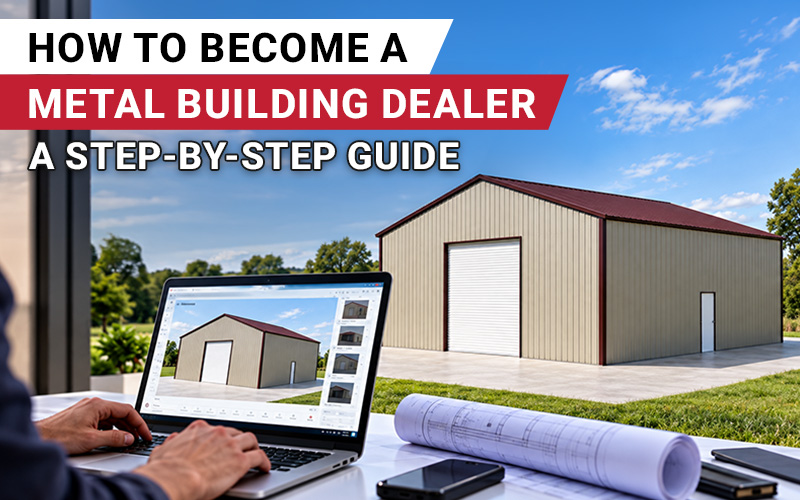
Becoming a metal building dealer can be an attractive business opportunity for contractors, sales professionals, construction companies, and entrepreneurs looking to enter the growing prefabricated building market. Rather than manufacturing buildings yourself, a dealer typically works with a manufacturer or supplier to sell, configure, and coordinate metal buildings for customers.
The basic concept is straightforward: you generate leads, work with customers to determine what type of building they need, provide pricing and configurations, and coordinate the order with your manufacturing partner.
However, becoming a successful metal building dealer involves more than simply signing up with a manufacturer and putting up a website. The following guide walks through the major steps involved in starting a metal building dealership, from choosing the right products to understanding the market and sales process.
Key Takeaways
Choose a metal building product line that fits the customers in your target market.
Research manufacturers carefully before becoming a dealer.
Set up your business, licensing, insurance, and financial systems before taking orders.
Learn how to configure and quote buildings accurately.
Build a strong lead-generation strategy around your local market.
Decide whether you will handle installation, subcontract it, or focus strictly on sales.
Establish clear processes for deposits, orders, delivery, installation, and customer communication.
Use technology to manage quotes, configurations, customer information, and orders as your dealership grows.
Start with a focused market rather than trying to sell every type of metal building to everyone.
Step 1: Decide What Type of Metal Buildings You Want to Sell
The first step is deciding what kind of buildings your dealership will offer. The metal building industry covers a wide range of products, and different manufacturers specialize in different structures.
Depending on your target market, you could sell:
Metal garages
Carports
RV covers
Agricultural buildings
Metal barns
Workshops
Commercial buildings
Warehouses
Equipment storage buildings
Industrial structures
Custom-engineered steel buildings
Your product selection should be based on demand in your market. A dealer operating in a rural area may find significant opportunities with barns, equipment storage, and agricultural buildings. A dealer in a growing suburban market might focus more heavily on garages, workshops, RV storage, and residential accessory structures.
Step 2: Research the Metal Building Market
Before approaching manufacturers, spend some time researching your local market. Look at competing dealers and manufacturers in the areas you plan to serve. What types of buildings are they selling? What sizes are popular? How are their products priced? Do they offer financing? Do they provide installation? How quickly do they typically deliver?
You should also identify your ideal customer.
For example, a dealership could target:
Homeowners needing additional storage
Farmers and agricultural operators
Contractors needing equipment storage
Small businesses
RV owners
Auto enthusiasts
Commercial property owners
Industrial companies
Understanding your target customer will help you choose the right manufacturer and build a more effective marketing strategy.
Step 3: Find a Manufacturer or Supplier
Once you understand your market, start looking for manufacturers that offer dealer or reseller programs. This is one of the most important decisions you'll make because your manufacturer's products, pricing, lead times, warranties, and support will directly affect your customers' experience.
When evaluating manufacturers, consider:
Don't choose a manufacturer solely because its base price is low. A slightly higher-cost supplier that provides better support, more reliable delivery, and fewer order problems can ultimately be much more profitable for a dealer.
Step 4: Set Up Your Business
Before you begin selling, establish the business infrastructure required to operate professionally. This may include forming an LLC or corporation, registering your business, obtaining applicable local or state licenses, securing insurance, opening a business bank account, and establishing accounting procedures.
Your exact requirements will depend on where you operate and what services you provide. For example, a dealer that only sells buildings may have different licensing and insurance requirements than a company that also performs site preparation and construction work.
You should also establish contracts and terms that clearly explain your responsibilities and those of the manufacturer, installer, and customer.
Step 5: Learn How to Configure and Quote Buildings
A major part of being a metal building dealer is learning how to turn a customer's idea into an accurate building configuration.
A customer may say, "I need a 30x40 workshop," but that is only the beginning. You may need to determine:
Building dimensions
Roof style
Roof pitch
Frame gauge or structural specifications
Wall height
Number and size of doors
Windows
Insulation
Open or enclosed sides
Electrical requirements
Foundation requirements
Local code requirements
Wind and snow requirements
Color options
Interior finishes
Delivery requirements
You need to understand which options affect the price and which requirements may affect engineering or permitting. Accurate quoting is critical. Underquoting a project can eliminate your profit, while inconsistent pricing can create confusion and damage customer trust.
If your manufacturer provides a dealer portal, online configurator, or quoting system, take the time to learn it thoroughly. The more efficiently you can build accurate quotes, the more customers your sales team can handle.
Step 6: Understand Permitting and Site Requirements
Metal building dealers don't necessarily need to become engineers or permitting experts, but they should understand the basic requirements that can affect a project. Building codes, permits, zoning regulations, foundation requirements, setbacks, wind speeds, snow loads, and other requirements can vary considerably by location.
A building that works in one county may require a different design in another.
Ask customers important questions about their property before finalizing a quote. Where will the building be located? What will it be used for? Is the site level? What type of foundation is planned? Does the property have access for delivery and installation?
The key is knowing where your dealership's responsibilities end and where specialized professionals need to become involved.
Step 7: Build Your Sales and Marketing System
Once your products and operations are ready, you need customers. A dealership can use many different marketing channels, including:
Local SEO
Google search advertising
Social media
Facebook advertising
Direct mail
Referral programs
Contractor partnerships
Agricultural networking
Home shows and trade events
Local sponsorships
Email marketing
Content marketing
Your website should make it easy for potential customers to understand what you sell and request a quote.
Create individual pages for your major products and service areas. For example, instead of simply having one page titled "Metal Buildings," you might have dedicated pages for metal garages, workshops, barns, commercial buildings, and other products you sell.
Photos and examples are particularly valuable. Customers want to see what the finished buildings look like and understand how different configurations affect appearance and functionality.
Step 8: Establish a Lead-to-Order Process
A successful dealership needs a repeatable sales process. A basic process might look like:
Lead → Qualification → Building Configuration → Quote → Follow-Up → Deposit → Final Order → Manufacturing → Delivery → Installation → Completion
Document each step. Determine how quickly leads should receive a response, who creates quotes, how deposits are collected, how change orders are handled, and how customers are updated about production and delivery.
This becomes especially important as your dealership grows. Without a standardized process, important information can easily get lost between salespeople, manufacturers, installers, and customers.
Step 9: Decide How Installation Will Work
You generally have several options for managing the installation side of the deal:
Manufacturer installation: The manufacturer handles installation as part of the project.
Dealer installation: Your company employs its own installation crews.
Subcontracted installation: You hire qualified local installers.
Customer-arranged installation: The customer handles installation independently.
Your choice will depend on your experience, market, staffing, and business model. Handling installation can create another revenue opportunity, but it also introduces additional responsibilities and potential liabilities. If you are new to the industry, starting with a sales-focused model and developing installation capabilities over time may be a more manageable approach.
Step 10: Use Technology to Manage the Dealership
Technology can become a major competitive advantage for a metal building dealership. At minimum, you should have a system for managing leads, customer information, quotes, orders, documents, and follow-ups.
As the dealership grows, specialized software can help connect the sales and ordering process. A 3D building configurator, for example, can allow customers or sales representatives to visualize different building options while simultaneously helping generate more structured quotes.
A CRM can also help sales teams track prospects from their initial inquiry through the final order.
How Much Does It Cost to Become a Metal Building Dealer?
There is no universal startup cost because dealership models vary considerably. Some manufacturers may have relatively low barriers to entry, while others may require more investment in marketing, inventory, facilities, staffing, or equipment.
Your startup budget may include:
Business registration
Licensing
Insurance
Website development
Advertising
Sales software
CRM or quoting software
Office equipment
Signage
Sales materials
Vehicle expenses
Employee or contractor costs
Training
Working capital
One advantage of the dealership model is that you may not need to maintain a large physical inventory of buildings. In many cases, products are manufactured after the customer places an order. This can allow entrepreneurs to operate with a relatively lean business model compared with businesses that need to purchase and store significant amounts of inventory.
Common Mistakes New Metal Building Dealers Make
Starting a dealership can be profitable, but several mistakes can make the process much harder.
Choosing a manufacturer based only on price: A low wholesale price doesn't help if products arrive late or customer service is poor.
Not understanding the products: Salespeople need to know what they are selling. Customers will have questions about dimensions, options, foundations, installation, and building requirements.
Overpromising delivery times: Manufacturing and installation schedules can change. Give customers realistic expectations.
Ignoring local requirements: Permits and building codes can dramatically affect a project's design and cost.
Failing to follow up: Many sales are lost because leads don't receive consistent follow-up.
Scaling too quickly: It's better to establish a reliable process with a manageable number of customers before taking on more volume than your team can handle.
Frequently Asked Questions
Do I need construction experience to become a metal building dealer?
Not necessarily. Sales, construction, project management, or industry experience can certainly help, but many aspects of the business can be learned through manufacturer training and experience. You should, however, understand the products you sell and know when a project requires assistance from qualified professionals.
Do metal building dealers manufacture the buildings themselves?
Usually, no. Dealers typically sell products manufactured by another company. The manufacturer handles some or all of the fabrication, while the dealer manages the customer relationship and sales process.
Can I make money as a metal building dealer?
Yes, a dealership can generate revenue through the sale of buildings and, depending on the business model, additional services such as installation, site preparation, accessories, and other project-related services. Profitability depends on your margins, sales volume, operating expenses, and manufacturer relationship.
Do I need a physical showroom?
Not necessarily. Some dealerships operate primarily through websites, phone calls, digital marketing, and in-home or on-site consultations. A physical location may become valuable as the business grows, but it isn't always required to get started.
How do I find customers for my metal building dealership?
Digital marketing, local SEO, paid advertising, referrals, contractor relationships, social media, and community networking can all generate leads. Building a strong online presence is particularly useful because many customers begin researching metal buildings online before contacting a dealer.
Should I offer installation?
Installation can provide an additional revenue stream, but it also increases operational complexity. New dealers may choose to partner with qualified installers before building their own installation crews.
Conclusion
Becoming a metal building dealer can be a practical way to enter the metal building industry without manufacturing the structures yourself. The basic model is built around finding customers, helping them choose and configure the right building, providing accurate quotes, coordinating orders, and delivering a positive customer experience.
The manufacturer you choose will play a major role in your success, but it is only one piece of the equation. A strong dealership also needs reliable marketing, knowledgeable salespeople, organized order management, realistic project expectations, and a clear process for handling everything from the first lead to final installation.
Want to know more about becoming a dealer? Contact Arkansas Metal Structures today for more information.