
Metal Building Foundations: Types, Requirements & How to Choose the Right One
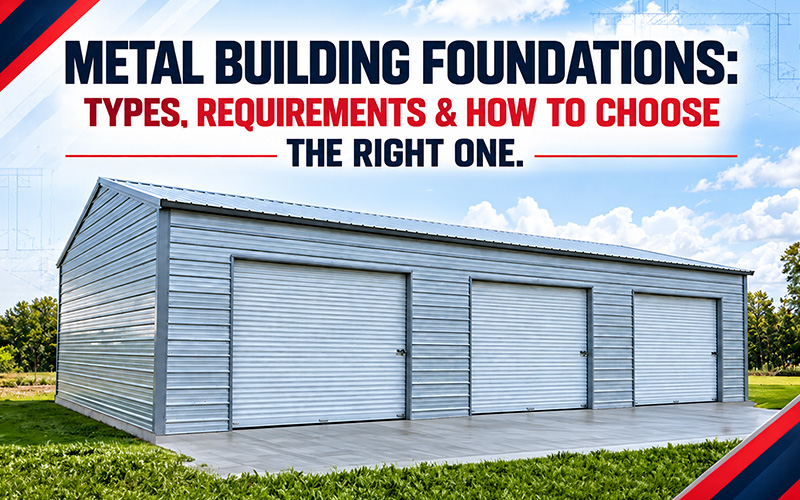
A proper foundation or base is an important part of any metal building project. It provides a stable surface for the structure and helps keep the building level and secure.
In the U.S., four common options for metal buildings are concrete slabs, asphalt, gravel, and soil. The right choice depends on the building size, intended use, property conditions, and local building requirements.
This guide covers the common metal building foundation options, basic preparation requirements, and how to choose the right base for your project.
What Is a Metal Building Foundation?
A metal building foundation is the prepared surface or support system on which a metal building is installed. It provides a stable base for the structure and helps distribute its weight.
For many metal buildings, the foundation or base may consist of a concrete slab, asphalt, gravel, or properly prepared soil. The appropriate option depends on the building and installation requirements.
Before preparing your site, check with your metal building supplier to confirm the recommended foundation or base.
4 Common Metal Building Foundation Options
1. Concrete Slab
A concrete slab is one of the most common choices for permanent metal buildings. It provides a strong, level, and durable surface for the structure.
Concrete slabs are commonly used for:
Metal garages
Workshops
Storage buildings
Equipment buildings
Larger permanent structures
A concrete floor is also convenient for parking vehicles, storing equipment, and using the building as a workspace.
Benefits of a Concrete Slab
A properly prepared concrete slab can provide:
A durable finished floor
A level installation surface
A clean area for vehicles and equipment
Better protection from mud and standing water
A long-lasting base when properly designed and installed
Not every metal building requires a concrete slab, but it can be a practical option for permanent garages, workshops, and other buildings that need a finished floor.
2. Asphalt
Asphalt can be suitable for certain metal buildings, particularly when a property already has a suitable paved surface.
An asphalt surface provides a firm base and may work for some garages, storage buildings, and similar structures.
However, not every asphalt surface is suitable for every metal building. The condition and stability of the existing asphalt should be considered before installation.
If you plan to install a metal building on asphalt, confirm with the manufacturer that the surface meets the requirements for your specific building.
3. Gravel
Gravel is another common option, particularly when a concrete floor isn't necessary.
A properly prepared gravel base can work well for:
Storage buildings
Agricultural buildings
Equipment storage
Some garages
One advantage of gravel is drainage. Water can move through the gravel rather than remaining on the surface when the site is properly prepared.
Gravel can also be less expensive than installing a concrete slab, although the total cost depends on site conditions and the amount of preparation required.
Simply spreading loose gravel over the ground is not enough. The area should be cleared, leveled, and properly compacted before installation.
4. Soil
Some smaller metal structures may be installed on firm, level soil when permitted by the manufacturer and local requirements.
Soil is a simple and economical option, but the condition of the ground is important. Soft, uneven, or poorly drained soil can settle over time and create an unstable surface.
Before installing a metal building on soil, make sure the area is firm, reasonably level, well-drained, and suitable for the structure.
Metal Building Foundation Requirements
Foundation requirements vary depending on the building and location. However, there are several basic factors to consider when preparing a site.
Level Surface
The installation area should be reasonably level. Significant slopes, low areas, or uneven ground may need to be addressed before installation.
Stable Ground
The base needs to provide adequate support for the building. Loose or unstable ground may require additional preparation.
Proper Drainage
Water should drain away from the building. Standing water can lead to muddy conditions, erosion, and other site problems.
Correct Dimensions
The prepared area should accommodate the required building dimensions. Confirm the measurements with your metal building supplier before beginning site preparation.
Proper Compaction
Depending on the selected base, the ground or base material may need to be compacted to provide a stable surface.
Local Building Requirements
Building codes and permit requirements vary across the U.S. Your local city or county may have requirements related to foundations, setbacks, permits, or site preparation.
Metal Building Foundation Preparation Checklist
Preparing the site before your metal building arrives can help make installation easier and prevent avoidable problems.
Site Preparation
Confirm the foundation or base requirements with your metal building supplier.
Check local requirements for permits and setbacks.
Choose a location with enough space for the building and installation.
Clear grass, debris, large rocks, trees, and other obstacles.
Level the site as needed.
Address soft or unstable areas.
Plan for proper drainage around the building.
Base Preparation
Choose the appropriate surface: concrete, asphalt, gravel, or soil.
Prepare and compact the surface as recommended.
Confirm the required dimensions before construction.
Make sure the finished base is ready before installation day.
Delivery and Installation
Confirm that delivery trucks can access the property.
Remove obstacles that could interfere with delivery.
Provide enough working space around the building.
Confirm installation requirements with your supplier.
Concrete vs. Gravel for a Metal Building
Concrete and gravel are two of the most common options considered by metal building owners.
A concrete slab may be preferable when you want a finished, durable floor for a garage, workshop, or permanent building.
A gravel base can be a practical alternative when you primarily need a stable surface for storage, agriculture, or equipment and don't need a concrete floor.
Feature | Concrete Slab | Gravel |
|---|---|---|
Finished floor | Yes | No |
Durability | High | Good when properly prepared |
Drainage | Requires planning | Good drainage |
Upfront cost | Generally higher | Generally lower |
Common uses | Garages, workshops, permanent buildings | Storage, agriculture, equipment |
The right choice depends on your building, property, budget, and intended use.
How to Choose the Right Foundation for a Metal Building
There is no single foundation that works for every metal building. Consider the following factors before choosing your base.
Building Size
A small storage building may have different requirements than a large garage or commercial metal building. Larger structures may require more substantial site preparation.
Intended Use
Consider how you plan to use the building.
A garage or workshop may benefit from a concrete floor, while a storage or agricultural building may work well with a properly prepared gravel base.
Ground Conditions
Examine the existing property. Is the ground firm and level? Does it become muddy after rain? Does water collect in the area?
These conditions can affect which base is appropriate.
Drainage
Good drainage is important regardless of the surface you choose. If possible, avoid areas where water naturally collects or address drainage issues before installation.
Local Requirements
Building codes and permit requirements vary by city, county, and state. Check with your local building department before beginning construction.
Manufacturer Requirements
Your metal building supplier can provide requirements for the specific structure you are purchasing. Confirm the recommended foundation or base before preparing the site.
Can You Put a Metal Building Directly on the Ground?
Some smaller metal structures may be installed on firm, prepared soil when allowed by the manufacturer and local requirements.
However, this does not mean that any piece of ground is suitable. The site should be stable, reasonably level, properly prepared, and adequately drained.
For larger or permanent metal buildings, a more substantial base may be required.
Can You Put a Metal Building on Gravel?
Yes, a properly prepared gravel base can be suitable for many metal buildings.
Gravel is commonly considered for storage buildings, agricultural structures, workshops, and other applications where a concrete floor isn't necessary.
The gravel area should be properly sized, leveled, and compacted according to the building requirements.
Can You Put a Metal Building on Asphalt?
Some metal buildings can be installed on asphalt, but the existing surface needs to be suitable for the structure.
The asphalt should be evaluated for its condition, stability, and levelness. Always confirm with the metal building supplier before using an existing asphalt surface.
Does a Metal Building Need a Concrete Slab?
No, not every metal building requires a concrete slab.
Depending on the building and site, gravel, asphalt, or suitable soil may also be options. However, concrete is commonly used for permanent metal garages, workshops, and buildings where a finished floor is desired.
The manufacturer's requirements and local building codes should always be checked before choosing a foundation.
Frequently Asked Questions
What is the best foundation for a metal building?
There is no single foundation that is best for every metal building. Concrete slabs, asphalt, gravel, and prepared soil can all be suitable in different situations. The appropriate option depends on the building, property, intended use, manufacturer requirements, and local regulations.
What is the most common foundation for a metal garage?
A concrete slab is a common choice for permanent metal garages because it provides a durable and level floor. However, other surfaces may be suitable depending on the building and property.
Can a metal building be installed on gravel?
Yes. A properly prepared and compacted gravel base can be suitable for many metal buildings, particularly storage and agricultural structures.
Can a metal building be installed on dirt?
Some smaller structures can be installed on firm, prepared soil when permitted by the manufacturer and local requirements. Soft or poorly drained soil may require additional preparation.
Is concrete required for a metal building?
Not necessarily. Some metal buildings can be installed on gravel, asphalt, or suitable soil. Whether concrete is required depends on the building, installation method, site, and local requirements.
How do I prepare the ground for a metal building?
Start by confirming the manufacturer's requirements. Clear the area, establish the correct dimensions, level the site, address drainage and unstable areas, and prepare the selected surface according to the project's requirements.
Do I need a permit for a metal building foundation?
Permit requirements vary by location. Your city or county may have requirements related to the building, foundation, setbacks, property location, or intended use. Check with your local building department before starting the project.
Final Thoughts
A properly prepared foundation or base provides an important starting point for a metal building. In the U.S., concrete slabs, asphalt, gravel, and prepared soil are common options, but the appropriate choice depends on the building and property.
Before installation, confirm three things: the appropriate base, proper site preparation, and local and manufacturer requirements.
Preparing the site correctly before your metal building arrives can help make installation smoother and provide a stable base for years to come.